Wednesday, June 21, 2017

Summer Solstice 2017 - Sunday Servitude


(This is an essay related to the poem Sunday Servitude posted on the fiction side of this blog).


I started writing Sunday Servitude back in 1990, in the spring. I remember exactly where the first line came to me. It was a pleasant spring day. I was reading and drowsing in the sun by the pool of my apartment complex. It was mid-morning on a workday with no one else around.

The life of Riley, right? That’s what most people assume I live like even today. Doesn’t every writer? Especially poets, who are a sketchy lot to begin with?

Well, not quite, at least then. At the time I was working 60+ hours a week in systems integration. Ten hour days in the lab, six days a week, minimum. This was back when I was still in engineering. At the time, I was working either second or third shift and had been for six weeks straight. Not by choice. Because I was single.

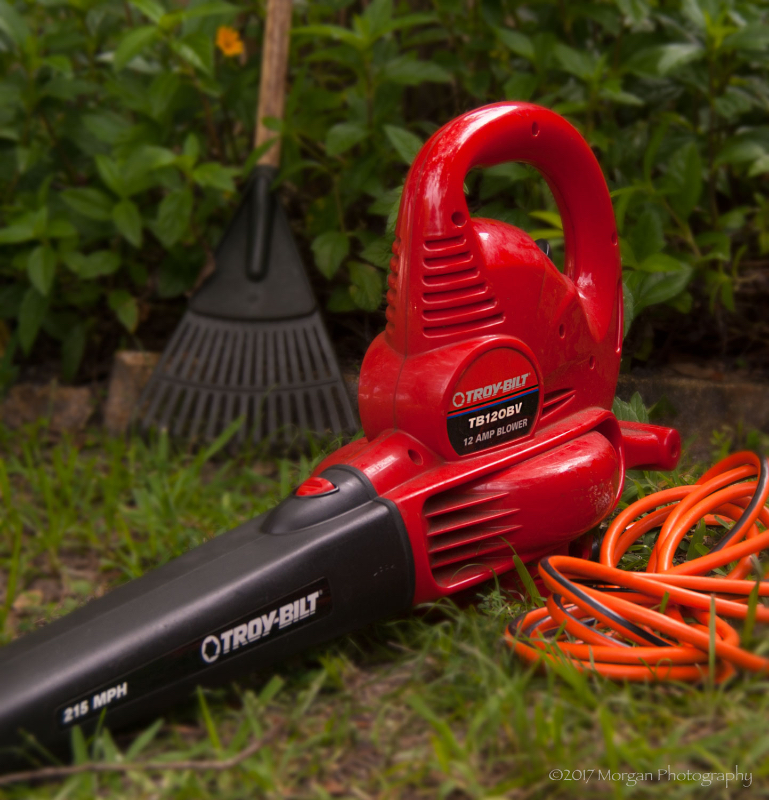
So that day I was desperately trying to recharge with a little down time before I went into work, and succeeding. Right up to the moment the landscaping crew showed up for their weekly maintenance. I was quite annoyed at the time, in that frustrated way you only can be with situations over which you know you have no control. A perfect moment ruined by the noise. Not enough time to wait it out and get back my Zen.

As they were finishing up, that first line popped into my head. Like the calls of birds marking out their territory by song. I wrote it down. A few others followed over time.

More came to me after we’d rented a house a year later. Most after we’d bought our first house a year after that. This was back when I was still able to do yard work without my grass allergies trying to kill me.

Growing up, my mother put me on lawn mower duty at 13. At the time, I wasn’t really big enough or strong enough to get the pull-rope on our old mower to spark it to life. I remember many a summer afternoon in the driveway struggling with it to near tears. Not that my mother much cared. The lawn needed to be mowed. She wasn’t about to do it. My father had been gone for three years. I was male, so it fell to me.

I was never so grateful as the day a neighbor across the street took pity on me after watching me for a while. He wandered over and taught me a few tricks. Things no one had ever told me. Like checking the sparkplug to make sure it wasn’t fouled, cleaning the air filter was gas (who knew there was an air filter), checking and filling the oil. Removing the carburetor and slipping in a little gas to prime the engine. Where to place my foot for leverage. How to snap-pull the rope. My mother assumed, again because I was male, that somehow all this knowledge was either inherent or genetic. Rest assured it wasn’t.

It’s probably no wonder I hated yard work. That hasn’t changed. But it still took until Karen broke her back just before I left engineering for us to get a lawn service. Our last mower (which was much easier to start) strained her back too much after that. Like most chores, we split yard work. By then, my allergies had gotten worse. While Karen doesn’t have my aversion to it, it wasn’t her favorite weekly activity. And we have never looked back. Now anything we do in the yard is because we want to, not because we have to.

A number of houses in the neighborhood have lawn services now. Of course, all on different days. One across the street is Tuesday, ours is Wednesday, another’s is Thursday. I think the thing I dislike most about lawn maintenance is the noise. I’m an auditory person. Noise like that disrupts me. At least the professionals tend to be efficient which minimizes it.

Even today, I think that leaf blowers should require an operator’s license. I don’t know how many times I’ve watched (and listened) to a neighbor blowing for forty-five minutes to get the very last stuck oak leaf off their driveway (not an exaggeration). A job that with a push broom would take fifteen at most. Or started mowing at 7 a.m. on a weekday or Sunday. The same neighbor who, whenever he saw us in the yard, would drawl, “I love to see people working.”

Yeah, I am not and never will be one of those individuals who relaxes by pushing a mower, or gets satisfaction out of the clean line of a weedwacker or an edger. I don’t get excited by about the machinery, which is just a tool to me. No different than a word processor, a necessity for the job. While I love the look of a well manicured lawn, I’m just not the individual best suited to attain it. I’d much rather read by the pool and dose.

I suspect as summer swings into full force with its blazing heat and humidity, at least down here, that I’m not the only one.


© 2017 Edward P. Morgan III

Monday, May 1, 2017

Beltane 2017 - Felicia

(This is an essay related to the poem Felicia posted on the fiction side of this blog).


Spring is a hard season for us and cats. Thomas, Sandy, Smoke, Sara and Felicia all died between the spring equinox and the summer solstice. Three we knew were coming for a long time, two we didn’t.

A number of people might not understand this poem or why I’m posting it. They may feel it’s frivolous, or trivializes what they see as more important deaths. People’s deaths. Human deaths. With death as with life, it’s all in how loss affects the living. Just as with who we love, we rarely get a choice in who we miss.

1996 was a hard year. One of the hardest of my life. It came after the year Karen had sworn me to silence about what her brother had done to her. It started with that silence being lifted, with her telling her parents, with her confronting him. None of that went particularly well. Worse now.

That year of silence had taken its toll. It’s not in my nature to sit quietly rather than to confront injustice. That enforced silence ate at me. It ate at our relationship. It ate at my attitude at work. It ate at my friendships, at people who I’m not sure really understood or could deal with me dealing with it. That issue was ravenous, insatiable. A beast that consumed way too much of our time, energy and attention.

In February, we noticed that Felicia was getting sick. A lot. Almost every day. Because of everything else going on, it took us longer to notice than it should have. We took her in to the vet, got recommended to a specialist, got her examined, got her tests. The results came back. Cancer. All through her abdomen. She was nine and a half years old. Not old for a cat but not young either.

My focus immediately shifted to her. We briefly tried a treatment of oral chemotherapy with her but quickly abandoned it when it was clear she wouldn’t tolerate it. After that, all we could do was give her medication to make her comfortable, try to get her to keep eating and wait.

Felicia is the only cat we’ve had who literally knocked at our front door. Ok, she didn’t knock. She cried.

I was living with Karen at the time. I’d graduated college six months earlier. Five months after that, I’d moved in with her once it became clear I could no longer live at home. Not that I every really could.

Karen had a cat named Duncan who she had gotten from a nearby pet store. He was a product of that environment, what we’d call today under-socialized when he was a kitten. He was probably taken away from his mother too young. He was friendly enough until he wasn’t. He’d turn aggressive on a dime. Karen had become a dead-eye shot with a water sprayer just to keep him from running completely wild.

I’d never lived with a cat before. My mother was allergic. She’s more of a dog person anyway. But Duncan had me thinking that living with a cat might be ok. He started me thinking about the personality traits I would want in a cat. Over that first month, I constructed the ideal cat in my mind. The only thing I hadn’t thought about was a color.

Karen and I were sitting at home one evening in December when we heard a crying out front. High, tiny, plaintive mews as if someone asking to come in. When we opened the door, a kitten was sitting on the doorstep looking up at us.

We petted her and looked her over. She was amenable to being handled so she’d been around people. We quickly spotted that all four of her paw pads were burned, blackened, cracked and bleeding. She had a cut and a kink at the tip of her tail like it had been broken. She had a nasty bite wound on her belly.

We brought her inside, not knowing what else to do. She curled up with us on the couch and started purring. And she didn’t stop purring for thirty-six hours straight. Thus her name, Felicia. Happiness.

I remember asking Karen like a kid if we could keep her. Like an indulgent, yet responsible adult, she said we should post a notice. I said no way, if someone had owned this kitten before, they’d lost their rights by the condition she was in. So we compromised. Karen would ask the apartment manager if anyone had reported a lost kitten. No one had.

We had the vet examine her. She was maybe three months old. He thought a tomcat had given her the wounds on her belly and tail. The only hopeful explanation any of us had for her paws was a road repaving project over a mile away. We didn’t want to think about the alternative. He gave us antibiotics and a sulfa lotion for her infections. He started her with her first round of shots. We picked up a flea collar.

Initially, Duncan wasn’t sure what to make of her. But then he decided she was a perfect playmate. She wasn’t as sure about this. But she proved to be quite the tactical kitten, figuring out all the tiny spaces in the apartment where she fit and he couldn’t. Especially places she could dart into, turn around and swat his nose when he stuck it in. For a little kitten, she more than held her own.

As it turned out, every trait I’d thought of in my ideal cat Felicia had. Patient, curious, affectionate, accepting. As I said, the only thing I hadn’t considered was a color. She was a tortoiseshell calico, so in that I had my pick. I came to think of her as my familiar.

Felicia was definitely more my cat than Karen’s. I was the one she clung to. Probably because right after we took her in, Karen went home to East Longmeadow for ten days for Christmas. So I was the one Felicia imprinted on. The giver of food, the cleaner of the box. The warmth she curled up with at night when I shut Duncan out of the bedroom to keep her safe.

A month later, she and Duncan moved with us to a new apartment in Melbourne. Not six months after that, we all moved again to DC. She and Duncan rode with me as I drove Karen’s little car while she drove the truck, which was quite an adventure in late May with no AC. Felicia spent most of the trip curled up behind my neck, or at my feet, trying not to get tangled in the pedals of the manual transmission.

When Duncan died quite suddenly that first summer, we adopted Sandy, who had been abandoned with our vet. Felicia saw her long as a lost sibling. She never had a problem with any other cat we adopted. Thomas, Smoke, Jasmine, she got along with each and every one, even if they didn’t always get along with each other.

She moved with us from Silver Spring to Gaithersburg, from Gaithersburg to Largo, from Largo to Pinellas Park, from Pinellas Park to Seminole. She became our most well-traveled cat, though she never really liked it.

As I said, she was my familiar. My comfort. My confidante. My little girl. I was fiercely protective of her because of how she came to us. She became the inspiration for a main character in my novel as well as a character in a game.

She saw me through stressful times. The months I spent desperately searching for my first professional job. The year Karen and I lived apart. The two years I spent working overtime while being denigrated by my coworkers. The second near split between Karen and me after we’d bought the house. Our getting married. The first and second periods where I traveled for weeks at a time for work and went to sea. I could never wait to see her when I got home.

And she me. She greeted me at the door whether I was coming home from work or returning from the field. She was always happy to see me. She jumped up on the bed each night to say goodnight. If she wasn’t sleeping by my feet, she’d come back when I got up to say good morning. She’d curl up beside me on the couch. The only time she’d sit on me was if I put a blanket over my legs in the recliner. She followed me around the house for weeks after I came home from a month in the shipyard and at sea, never letting me out of her sight, as if she wanted to be sure I wouldn’t disappear again.

I cared for her so much and so deeply, it made Karen more than a little jealous. What I’m not sure she understood at the time was that because of my background and the way I grew up, this little calico was teaching me how to love. Teaching me that it was ok to be vulnerable. Ok to show affection.

If Karen and I started fighting, Felicia would jump up on the table between us and look at each of us, as if telling us to cut it out. The adult in the room.

She was with me when Karen told me what her brother had done to her. She stuck with me during my vow of silence. As I was sorting all that out, I needed her so much.

I just didn’t see that she needed me, too. I still feel a crushing guilt that I didn’t see what was going on with her sooner. It was my responsibility to take care of her, just as she had taken care of me.

I would have sacrificed anything to save her. I understood that this was always part of the bargain between man and domesticated feline. We live longer. They almost always die first. But I wasn’t ready. I’d never be ready. I don’t think I am today. 

When we knew the end was near, we took some vacation so we could spend her last days with her. Karen spent the day before she died drawing her on the porch, which is where the above picture comes from. Felicia was restless. She couldn’t get comfortable. She hurt inside.

We fed her catnip and tuna juice, her favorite food, what little she would eat. We took her into the backyard on a leash which she used to love. A heron landed in the yard nearby. Even that close to the end, she wanted to take down that bird even though it was three times as big as she was.

We’d talked to our vet who agreed to come out to the house to put her to sleep so we wouldn’t have to take her in. After several visits to the vet and the emergency clinic, she hated car rides. We didn’t want to do that to her on her last day.

As we counted down the hours, we petted her, and purred with her, and lay with her on the floor. I held her on the porch when the vet arrived.

Felicia’s was the first grave I dug in our backyard. Five feet deep, through layer after layer of colored sand. We buried her with her favorite toys and blanket. We planted a yesterday, today and tomorrow over her. I caught my wedding ring on the posthole diggers which then tried to rip my finger off. That put a notch in my ring that remains there to this day. Something I will always remember her by.

I watched my father die and never shed a tear. With my little girl, I cried for days. I’m crying still. 


© 2017 Edward P. Morgan III

Monday, March 20, 2017

Spring Equinox 2017 - Clouds


(This is an essay related to the poem Clouds posted on the fiction side of this blog).


Early in my engineering career, I had to travel a bit. Not as much as many people I knew, but enough to call air travel regular. ’88-90 and ’93-94 were particularly heavy years. Back then, a full service travel agency occupied a suite right inside our admin building. We could use them for official trips and for vacations.

When I was a kid, I used to love flying. I think because I remember dropping off and picking up my father from the old airport in Orlando. Way back before there was security or even x-ray machines, when you could still meet someone at the gate. Seems like a geologic era ago. Back then, air travel still felt exotic, perhaps a carryover image from the ‘60s. My father flew all over the world, sometimes for work, sometimes with my mother. Dunoon, Sunnyvale, Paris, Frankfurt, Nassau, Charleston, Boston, Madrid.

Anymore, I’m not as fond of flying. Mostly, it’s a hassle between security, the lines and the cramped conditions. As well, one or two rough landings have put me off a bit. Particularly one in Seattle which is the only time I remember the pilot standing outside the cockpit as we disembarked and refusing to make eye contact with anyone. Looking back, I think he was lucky to get the plane down in one piece. He had two distinct opportunities to screw that up. I’m glad he rose to the challenge even if none of us were particularly happy about it at the time.

Back in the ‘90s, flying occupied a kind of gray area with me, somewhere between romantic and required. Routine. It was something I did, not something I thought much about. Often enough that I could identify Waycross, Georgia, from the air. I’d been there (on the ground) a couple times for game research. It has a very distinctive five-point road pattern and lies along the flight corridor from Tampa to Maryland and the northeast.

For work, I mostly flew alone. There might be other coworkers on my flight but in general we never sat together. Which was fine by me. Because of the nature of my job, rarely could I do any work on the plane. Mostly I read or caught up on sleep. When neither of those felt inviting, I’d stare out the window. I wasn’t much for chatting with strangers. Just not in my nature. It wasn’t until years later when we started flying back and forth to Dragon*Con that I purposefully set aside that time to write.

Sometime in there, I started carrying a notebook with me when I traveled. I just found that first notebook in the back closet as I sought out information for this essay. I can’t say how long I’d been carrying it. A date in ’92 appears about a third of the way through it. A draft of Clouds comes a few pages later. I distinctly remember that one being inspired by the view out of a plane window, though I have no memory of which trip I might have been on.

Which means it could have taken as much as two to three years before I thought Clouds was finished enough to scribe into my little tweed book of poetry. It likely got set down for an extended period before I was in the right mood to pick it up again. Such is the nature of me and poetry. I only have one draft of Clouds in the notebook which means I likely typed it in and worked on it electronically. Or more likely printed pages to mark up and retype in. If you think it’s bad now, you should have seen how it first came out. That’s pretty much true of most things I write. 

So why post this poem now? What is it that still appeals to me? Clouds still resonates with me, especially the final line. I think it captures the way I felt then about flying and about my life at that particular moment. There is a different world up there if only we are willing to see it. A world where you can leave any troubles in this world behind. And yet not become so unanchored or so lost that the illusion blocks out reality below.

As I reread it, I think about Larry Niven’s novel, The Integral Trees, which I read in college. He created an exotic science fiction world in which there is no ground. It’s set in the upper atmosphere of a gas giant where indigenous life formed which was subsequently colonized by humans. I can tell his vision influenced me. More, it built on an imaginative influence already present.

When I was young, I used to lie on the floor in our living room and stare at the ceiling. At some point it struck me exactly what it would be like if the world turned upside down. The ceiling was bright white popcorn yet completely clean, clear and unobstructed. There was no furniture to dodge, no patchwork carpets, no cluttered surfaces. Inverted doorways became hatchways with a large lip you had to step over like watertight doors on a submarine. I remember laying there for quite some time imagining walking on the ceiling, complete with its sometimes inset, sometimes bulging light fixtures.

In our current home, the ceiling fans and dining room chandelier make for interesting obstacles. As does the drop ceiling in the kitchen that transforms into a step.  And the fairies, dragons, crystals and oil lamps hanging from monofilament threads and chains that become stalagmites.

I’ve done this in every place I’ve lived, though I don’t do it often anymore. It still takes a second of conscious thought to reorient my perceptions to up being down. But once it’s there, it sets like concrete. In the same way that once you see one of those old 3D images buried in black and white static noise.

I think most kids do this or something like it. Something that involves their unique perspective, or one they create. Children are imaginative. It’s how they learn. I’m not entirely sure why we fall out of it, those of us who do. Perhaps we’re eventually admonished for it being, well, childish. Perhaps the novelty of it falls away as we grow and our perspective stabilizes. Or perhaps the skill simply rusts from disuse over time.

And yet, especially today, I think it’s important to attain and retain that perspective. There’s escapism in it, recognition that there’s only so much in this life that can taken seriously. In troubled and troubling times, whether personal or political, that balance of the real and comfortingly imaginative perspectives is what will see us through. Combined with the sense of renewal it offers, for me, captures what the spring equinox is all about.


© 2017 Edward P. Morgan III

Wednesday, February 1, 2017

Imbolc 2017 - Penance


(This is an essay related to the poem Penance posted on the fiction side of this blog).


My 82 year-old aunt is one of perhaps a handful of people who could get me to watch a church sermon. In fact, she may be the only person right now. She does not use that power lightly or frivolously. She may not know she has it.

Several days ago, for the first time in more than a decade, I sat in a virtual church and listened. Because she wanted me to. Because she thought it was important. She was right.

What I heard was a story of someone's personal family history. An affirmation of the things I've been thinking and feeling since the election, discussions we've had and half-joking plans we've laid.

The minister wasn't joking. I heard talk of refuges, networks and vigilance. Not radical talk, measured discourse based on his deeply personal experience. Discussions I never thought I’d hear outside of a fantasy role-playing game.

I'm not sure whether watching it more heartened me or scared me. The congregation was sober. These were thoughtful, upstanding, rational people, not reactionaries, pundits or demagogues. It's not that his ideas were new. It's that they touched some of my deepest fears. Fears I actively try to hold at bay because, although I've learned to trust my instincts, I am wary of giving in to them too far.

I suppose at its heart, it confirmed what a church is supposed to be about, a community looking out for one another. My aunt’s denomination in particular is much more focused on the here and now than what comes after. They are progressive and proud, and have a longstanding tradition of standing up for their beliefs, beliefs in others and their potentialities, not just themselves, even when those beliefs are unpopular.

Watching brought back some memories of going to church as a child. Good memories. Memories of the church I was raised in rather the churches that soured me to the tradition based on their radical interpretations that I just couldn't sync up with either my own experience or the world. 

It's not that I see myself going back to that. When so many of my friends and relations renewed their church affiliations after 9/11, I found that I'd already tread a different path. One that works for me. One that's seen me through some hard times. Not always comfortably but successfully.

The crux of the sermon, without getting into detail, was a quote by Faulkner. “History is not what was, but is.”

The minister spoke on two levels, one being his family’s personal experience in the Holocaust, the other being our related current situation. I think that is the point of Faulkner’s quote, that history is not what happened in the past. It’s what’s happening right now. As each moment slips by, the decisions we make become history, ours and someone else’s.

So how does that relate to either Imbolc or the poem I posted. Well, perhaps that explanation is a bit more roundabout. Though perhaps they are also intertwined.

I can’t tell you why I wrote Penance but I can tell you exactly when. It was the first poem I ever wrote. I started it on scraps of paper over one summer while I was third shift in a convenience store. I have no idea what inspired me other than wanting to play around with a sense of irony, and for it to have a particular feel. I do remember that was the summer after a good friend’s mother died and he came up to see me once in the middle of the night to talk, I think because he was awake and he knew I would be too. I can’t say whether my listening helped him. I can only hope it did.

I kept poking around at that poem for another three years, transferring it from one page to the next. Adjusting a word here, a bit of formatting there whenever I ran across it. Mostly absently, more like a meditation or a distraction than a purpose. The only thing that mattered was that I kept it and kept it in my mind.

My senior year in college, I took a course in creative writing as one of my electives. I forget if it got designated as my one and only free elective or whether it was one of several necessary humanities electives. Either way, I think I was the only electrical engineer in my class who sought out various humanities and literature courses because I enjoyed them and still couldn’t get enough. Since there were only fifteen of us who graduated (out of 60-100 who started my freshmen year), I’m almost certain of it.

At the beginning of the course, we had to submit a piece of writing, a short story, the chapter of a novel, or a poem. Something we wanted to work on and improve. Something that would be read and reviewed by the class, then revised and resubmitted at the end.

Instead of writing something new, I dug out Penance. I still liked it and wanted to see where it stood. Time probably played a factor. By then, I was deep into engineering courses and a senior project that demanded a fair piece of my attention. Or I was just skating.

Either way, my draft got trashed pretty hard, from formatting to phraseology. Though even as I was getting crushed in a very public forum of about twenty other students, some of whom were quite talented, I was noting ideas on what I could improve. I continued working on it through the spring.

When I resubmitted it at the end of the quarter, the instructor seemed happy enough with the revisions. Of course, he still didn’t like it, which he told me right after the final reading as he assigned his grade. He said it sounded “too D&D.” Fair enough, though I suspect some of his personal feelings leaked through.

He used to party with the guys in the apartment below mine. Theirs was a Bohemian frat house while ours was more of a geek enclave. Every now and then when they got out of hand after too much alcohol, I took to pounding on the floor with giant duct tape wrapped PVC and insulation foam hammer left to me by a former roommate. That usually settled things down, but only into conspiratorial, gin-soaked whispers. I suspect they were plotting our demise. Thankfully, they had all the motivation and planning skills of alcoholic artists.

As well, at one point he’d taken a good portion of class session to rail against the university administration, his department chair (who was a friend of mine and a wonderful teacher) and the Secretary of Education. I called him out on it in private after class. He was not amused and opted to give me an impromptu lecture on satire. Which might have been ok if that’s what it had been. It was more of a personal rant against the unfairness of it all and how much he was disliked by the department. And how they were plotting to get rid of him.

So we had history. Or he was right and my poem was what it was which wasn’t fine literature or a postmodern examination of a personal existential crisis. Either way, I was happy with the result of my effort and didn’t care about the grade.

I’ve always felt a bit funny about this poem. Because it went through a public reading and summary execution, and because I took notes and suggestions as I cleaned up the corpse, I never felt it was completely mine. So I’ve always been a bit reluctant to claim it and share it.

But as I reread it as I came up with the idea for this set of Celtic holiday messages, it still sent a little chill up my spine. I can picture this individual, the choices he’s made in the past and how they affect him in his present. That, like Sisyphus, he is doomed to revive a garden that his previous actions ensure will die again. His personal boulder pushed up his personal hill as penance for what he’s done. It’s a story as much as a poem. It’s not my story but it is one I can empathize with even if I’m not quite sure where it came from.

History is not what was, but is.

So why share it now? Why today? Why at Imbolc?

Well, Imbolc should be obvious if you’ve read these messages before. Imbolc is also known as Candlemas. Early Christians poached it from the festival of Brigit (who got co-opted into St. Brigid), the Celtic goddess of fire and poetry among other things. So it’s a poem to share on a day of poetry, one that seems to fit with the winter and its discontents.

As to why I’m posting it at this very moment, that, too, should be obvious. We, as a nation, have made a choice. We have turned in a particular direction. Not in a measured, thoughtful way where reasonable people can disagree. In a divisive, potentially disastrous way. I see already deep rifts deepening. Both sides seem tamped and primed for revolution. Their positions are entrenched along the River Somme or a Maginot Line. Or the outskirts of Petersburg.

People all over the world are facing that same choice, whether to turn toward or turn away. Many are scared. Or frustrated. Or feel neglected. Some justifiably so, others perhaps not. With the latter, there are men well gifted in exploiting their fears.

I cannot say where this choice will lead. My hope is that it, like many things, ends up being better than we think, better than we fear. That it provides a measure of good along with the perceived bad. A measure of balance. A measure of progress as we stumble forward through this life, hopefully wiser than we began.

But that outcome is far from certain based on the early portents and cycles of history. I was reminded of that as I sat and listened to the sermon. The time of storms is near again. Watchfires burn the northern sky.

History is not what was, but is.

In an instant, the choices you make become irrevocable, at least for that particular moment in time. You can’t go back to undo those decisions, you can only move forward from that point. Only if you are extremely fortunate will you get to choose again and discover a portion of the road not taken. More often not.

There are consequences to our actions. So in the seasons ahead, be sure to choose wisely.


© 2017 Edward P. Morgan III

Wednesday, December 21, 2016

How I Write Fiction: Description (Winter Solstice 2016)

Vanishing Point


As the year of writing essays draws to a close, we end up where we started at Imbolc, writing lines. The goal of description is to lift the fog in the reader’s mind and allow her to see the story. Through it, details emerge that make a story come alive.

By the time I sit down to spin an idea from the magic box into a story, I usually have at least a rough outline of the plot, if only in my head. I have a sense of the world it is set in. I know the main characters. I might even have some snippets of dialog. Description is the glue that binds it all together, the final piece of the puzzle slipped in place. In ways, it is the creation of the story itself.

Like wishes from a magic ring, the best things come in threes. I write stories in three distinct waves or drafts. The first involves getting the ideas down from start to finish unobstructed though sometimes incomplete. The second cleans up the first, filling in any holes, deepening it and making it resonate. The third cuts out the excess to make it flow and polishes it until it shines.

I start the first draft by working in a notebook. Writing longhand slows down any stray thoughts and allows a voice to surface. It focuses my mind on the story as I start to hear that narrative voice in my head. The morning I first sit down with pencil and paper, I try to write out at least a few pages without interruption. I keep writing until the words eventually run out. By then, my mind is buzzing with phrases and descriptions for several more scenes in the outline. I note as many of these as I can.

The downside of writing longhand is the duplication of effort as I then have to type in what I’ve written. When I sit down at the computer, I usually abandon the notebook. Once the voice is set, the story begins to flow by itself. But if I get stuck or discouraged or end up being away from a story for a prolonged period (as happens much too often), I’ll return to the notebook again to see what comes out. It’s a surprisingly effective tool for getting past writer’s block.

Because my hand is slower than my thoughts, writing longhand gives my mind a chance to ruminate just a bit between words as my fingers catch up with the images my muse has conjured. There is something meditative about the process, and more than a bit ironic. By slowing down, I speed up the overall time it takes to write a story down.

Writing longhand also puts effective curbs on my desire to edit while creating. Those two processes should always be kept distinct. Once you start cutting and polishing, you’ll want to do more, which means your mind will have switched from a imaginative mode to a critical one. Those are two separate mental spaces. Once your inner critic kicks in, your muse will flee back to her sanctuary.

Unlike most writing advice I’ve read about first drafts, I don’t just power through mine. Many books will tell you to just keep moving. If you stumble with a question or an unknown, leave it blank, note it and move on. You can revisit it in the next draft.

I don’t work that way. It’s not my process. When I get stuck on some aspect of filling in the plot, or getting a character from A to B, or often even envisioning a location, I almost always address it right then. Small details I note and let go, just not anything central to the overarching storyline.

That’s a dangerous path, but if I don’t solve the problem right away, it will niggle at me and ultimately slow my progress to a crawl. My mind knows something is wrong and can’t keep from worrying it like a polished stone. Perhaps that’s the engineer in me. Or my mind just works step by step, knowing where each foot will fall upon the path before lifting it. Your mileage may vary.

That’s not to say that there isn’t still work to be done after my first draft. There certainly is. It’s just that my first drafts are perhaps more evolved than some others.

In the second draft, I begin to sweat the small details. This is where I try to deepen my arguments by reinforcing both descriptions and the metaphors and symbols underlying them.

Specifically the descriptions of locations. In general, I have to be able to see the places I write about in my mind, large or small, from city streets to individual rooms in individual houses. I have to know exactly where that place is. Some locations are based on my memory of places I’ve been, others on pictures I seen or have in front of me, a few on impressions from other peoples accounts. Many locations end up being fusions of two or three different places.

As an example, the Stack Maze in Interdiction was based on a housing complex called Habitat 67 in Montreal that caught my imagination when I first saw a picture of it in my Art and Architecture textbook in college. I combined that with the container stacks I’d seen in ports and morphed it all with the idea of constructing homes from castoff containers used to ship supplies to a colony.

And just as with characters, place names are important to me. In more than one story, I’ve chosen a location as a setting from a road atlas just because the name itself had some underlying meaning, either as a symbol or a metaphor. As another example, in Aluria’s Tale, the main human character first encounters main genetically modified feline character just outside Roswell, Georgia. Why? Because where better to discover a secret, near alien species hidden by the government than a place called Roswell.

For some stories, I’ll make up place names based on underlying linguistics. So in the Celtic area of the fantasy world surrounding the city of Dirkham, you might run across Mil Tober (literally honey well in Scots Gaelic place name lore) or Dun Aird (high fort). Or, you might cross the River Afon on the ferry at Harper. All of which I hope evokes a particular look and feel even if the reader doesn’t understand the direct meaning, which I almost never call out in the story. Sometimes, as with Scots Gaelic or Welsh place name conventions, readers may subconsciously pick up those naming patterns over time (like caer being a castle or kil being a church).

As I said, I need to be able see each location and scene in my mind, even if I don’t describe it. I need to know if the end table with the open book on it next to the chair in Peacekeeper is round or square or triangular. I need to know whether the chair itself, which is unmentioned, is overstuffed or wing backed or a recliner or just a simple hard-back. While I rarely go into that level of detail, I need to be able to see it in case it ends up being important down the road and it needs to be described. Strange, I know. But again, that’s just the way my mind works. 

By the time I finish the second draft, there should be no questions left unanswered, no matter how minor. And any changes from the first draft, from place names to the content of a character’s pockets to the underlying metaphor of her grandmother’s gold promise ring sewn beneath the beltline of her fatigues as emergency currency should be woven back in from the very beginning. Those metaphors and symbols need to resonate. By the time it’s finished, the second draft should read clean from front to back.

Only once it does I begin the process of crafting and carving the third and final draft from it. Just as with sculpting, the idea here is to remove material and polish what you leave behind.

The goal is strictly editing. It is the process of deciding what needs to be in a story and what is better left out. To a large degree, in fiction less is more. Finding the right balance is what allows prose to shine. 

In general, there are a few items I focus on. One is smoothing the transitions. In many cases description and dialog are stitched together from separate pieces of writing on separate days as, again, that’s how my mid works. So making sure those seams are invisible, if they aren’t already, is my first goal. 

Another area I target for review is where I move the characters around. Many times while writing my mind wants to say a character went from A to B to C to D in a logical progression, where in reality all I need is a scene break between A and D because B and C add nothing to the narrative. Sometimes that scene break serves as a time break as well where going into details of what the character did for the intervening three hours is either unimportant or can be summarized with something like she cleaned her gun and then drove to the rendezvous. 

Next, I dwell on words I might not have been mindful of when the first draft spilled out. At this stage, a quality dictionary and thesaurus are essential. Some words I find should be more precise rather than the general ones I used. In other cases it’s just the opposite, a simpler word will do. Often I’ll look up the meaning of a more exotic word to make sure I’m using it right, even if it’s only through a secondary meaning. Or I’ll peruse the etymology of a word to see if there is a nuance in its history that I want to exploit.

I try to cut out every unnecessary word. Adjectives, adverbs, whole descriptive phrases at times. Sometimes sentences or entire sections. The goal is to make certain the words that remain have the most impact. Sometimes that requires addition rather than subtraction.  As well, I look for places where I reuse the same word or phrase unintentionally within a short space and find an alternative.

Finally, once I think it’s ready, I read the piece aloud, just as I do with an essay or a poem. Here I’m listening for any burrs, any phrases that I consistently stumble over. Or places where I continue to reverse word order from what’s on the page. In both cases, I think my mind is trying to tell me something so I try to heed it.

Only when I get a clean read do I print it out and hand it over to my beta reader for her assessment, critique and editorial comments. And after I address and incorporate her notes, I read the piece one last time on the physical page to make sure I haven’t missed anything. Sadly, I still often do. 

In my experience, a story tends to grow from the first draft to the second and then shrink from the second to the third. But the third draft is almost always longer than the first (unless I’m writing under a strict word limit).

To reiterate, first draft gets the story down. The second draft deepens it. The third draft oils it and makes it hum.

Of course, each of these drafts may well encompass more than a single iteration of their own. I don’t tend to work that way, but many writers talk about multiple, sometimes double digit drafts just to get their stories where they want them. As I mentioned, I tend to worry over each aspect as it comes up so I don’t have to redo work. In the end, the time of our journeys may be much the same. Many paths, one mountain.

As I said at the onset, the goal of description is to lift the fog in the reader’s mind and allow her to see the story. Images should form in her head. She should believe the places the characters move through could be real. She should feel as though the world continues to shift behind the falling curtain even when there is no character there to witness the evolution. The characters themselves should seem like real people to her, friends, enemies or simply interesting strangers in a coffee shop. They should have ticks and nuances that anchor them but not so heavily as to weigh them down.

The moment you lift that fog for her, when she tells you she can read the names of the boats in the marina as she passed each on the dock, that she can hear the conspiratorial whispers of your characters in one of the cabins over the gentle lap of waves and the distant, intermittent fog horn, that she can smell the sea mixed with death and diesel and the scent stale fish, that she can feel the veil of mist open the pores on her face even as it departs and taste the salt as its lingering tears run to the corners of her mouth, then and only then can you can officially call yourself a writer.

But even then, your journey has only just begun.


© 2016 Edward P. Morgan III 

Monday, October 31, 2016

How I Write Fiction: Dialog (Samhain 2016)

Eye Contact


Long before stories were written, they were spoken. So you would think writing dialog would come as easily as talking. For many authors, it does not. Dialog is consistently mentioned as one of the hardest aspects of the craft for a writer to master. Why?

Well, there’s a dirty little secret underlying dialog. It isn’t really the way people talk at all. It’s a graceful illusion, a shorthand for the way people actually speak. It’s convenient stand-in, a body-double. A doppelganger.

Don’t believe me? Listen to how people actually talk to one another. I mean really listen. People pause, they stumble, they interrupt, they insert random asides. They er, they uhm, they use the wrong words, they leave sentences dangling without completing them. In general, they use a shorthand that relies on the others in the conversation to interpret what they really mean, more so if their co-conversationalist is well-known like a friend or family. If you want a really good example of this, listen to only one half of someone’s telephone conversation.

Yes, people are lazy even in the way they speak. It’s an evolutionary advantage. Never use more energy than you absolutely have to. Save it for something important like survival.

A writer cannot survive by being lazy. The last thing a writer wants is for her readers to have to infer what her characters really mean, what they are really trying to say. So mimicking speech is unlikely what she wants to do if she wants to be clearly understood. No one wants to slog through an unedited transcript of an actual conversation.

Learning to listen to the way people talk is a lot like learning to draw. First, you have to train your mind to see what’s really in front of it, not the symbolic shorthand it uses to quickly categorize items it sees everyday to save time. Don’t believe me, picture a chair, quick, right now. Odds are you just pictured something like a simple, straight-back chair without arms or even a padded seat. Whatever it was, compare it to the chair in your office, the chair in your living room, the chair at your dining room table, the chairs in your twelve-step program. Chances are they look nothing alike other than in the most basic, symbolic ways. They both have backs, they both have seats, they both have four legs (or maybe five with wheels). In order to draw one of those real chairs, you must cast that symbolic one aside and actually see the unique chair in front of you. Otherwise, your mind will continue to try and force that symbolic chair into your drawing which will mar the results. It’s the same with faces, or shoes, or anything other common item you want to draw.

And it’s the same with listening to people in conversation. Your mind filters out the ers and uhms, the pauses and stumbles, the wrong word choices and interruptions you don’t always know you make. But only after you learn to hear what’s really there can you capture the essence underneath.

What a writer wants to do is make her readers think she’s captured authentic speech, at least the way people hear it in their heads. People are very good at filtering out those odd little speech ticks and filling in what’s missing. A good dialog writer captures what comes out the other side of that black box in people’s heads. What they think they hear, not what is actually said. And if you only employ the front-end filter, you’ll end up with perfectly acceptable dialog. Kind of like listening to the neutral Ohio or California accent of a newscaster, it works well if the main point of your dialog is to convey information and emotion. Master that alone and your dialog will be generally well received. For many applications, that’s enough.

But if you want to use dialog to reinforce a character, there are further choices to be made. The first, just like writing in first person, is finding the voice of that particular character. For me, a great deal of that revolves around word choice.

First, a quick aside about phonetic spelling to reinforce a character or his accent. This used to be quite common. I still run across it now and then. I don’t favor it and never really have. Mainly because I find it very difficult to read and slow to sort out. If I do it at all, it tends to be once with one or two words (or an explanation in exposition) to set the example then let it go.

Colloquial or regional speech is different, though here again, I try to be careful. While a few choice words can immediately set where you are (say “wicked” around Boston, or “y’all” in the South), it’s easy to overdo it and have it sound like a parody (or worse, an offensive stereotype, cuz). There are more subtle constructions, phrasing and patterns of speech that tend to lend better affect. In the South, phrases like “God love her” or calling someone Mister Edward (for me), or Miss Karen (for my wife), depending on the speaker and the context. And that’s before you get into the alternate regional choices of words for things like cola, soda and pop. The best thing to do again is listen and mimic what you hear, lightly. Like salt or Tabasco, a little flavor goes a long way. 

Perhaps best way to illustrate that is with foreign accents. Many non-native English speakers tend to initially speak English based on the rules of their native language. Where English tends to construct its sentences in the order of subject-verb-object, other languages do not. Welsh prefers verb-subject-object. As does Hebrew. That construction sounds odd to an English speaker because of the word order (which may explain why the Bible has a particular cadence at times like, “spoke God to Moses” rather than “God spoke to Moses”). It’s the same with languages that don’t use articles (a, an, the), languages that put the adjective after the object, languages that don’t use contractions, languages that have gendered nouns, and a host of other features you might hear if you listen.

As an example, having a character not use contractions can make him sound formal or authoritative or foreign depending on the context of the other word choices around that tick. 

Word choice and phrasing can vary depending gender, too. As I’ve read it, part of gender speech patterns are socially derived, but perhaps an equal part are evolutionary. They are a bit tough to pull apart. In broad strokes, there are different patterns to male and female communication evoked by word choice and style. That’s not to say all men or all women speak in a particular way, just that there are tendencies a writer can exploit or reverse for either resonance or effect. Having a female character speak with a distinctly male style might make her strong in some reader’s eyes or come off as a bitch in others. Just as having a male speak in a female style can make him seem either empathetic and charismatic or weak and effeminate, depending as much on the reader as the writer. Or they might not notice at all.

Another aspect of word choice that is more unique to English derives from its history. For many words, we have a choice of two equally weighted synonyms, one that derives from Old English, another that derives from Norman-French (from the days of the Norman Conquest). We use most interchangeably but there is sometimes a subtle difference between them. Old English words tend to have more impact (often, though not always, they tend to be shorter). Norman-French words tend to soften the impact (and sometimes tend to be longer). An example might be cunning (Old English) and guile (Old French). Cunning has a meaner, more raw connotation to me, where guile comes off as more artfully manipulative. Compare your reaction to weird (Old English) and strange (Old French). Or freedom (Old English) and liberty (Old French via Latin).

It’s the same with Old English and Latin directly. As an extreme example (because of variants in recent news stories), think of the words vagina (Latin) and cunt (Middle English). Or fornicate (Latin) and fuck (Old English, or just old). One of each pair probably sounds more jarring and profane to your ear. If your character is educated, of a certain status or a certain morality, she might prefer one over the other. And, yes, many of our English curse words come down from Old English (bitch is another but bastard isn’t). That alone should demonstrate their power.

Which segues to a broader point about profanity. It’s not something I avoid if it fits the character, but it’s also not something I throw in gratuitously. It can be an effective tool in revealing character, by its absence as well as its presence. Consider a soldier who does not curse like the others in a hard-bitten company. That might say he is naïve. Or innocent. Or religious. Or aristocratic (so not acceptable language). None of which you have to call out but all of which might resonate with other word choices to reinforce the trait. But the same word of caution: profanity, like most other aspects of dialog, is very easy to overdo.

As is slang, which can be even more fraught with danger. True youthful slang ages and morphs at lightning speed. Words that sound hip and edgy today can totes sound outdated and overused literally overnight.

Also note that the same person tends to speak in different ways depending on their audience. They might choose different words or phrases when talking to their wife, their children, their coworkers, or the cashier at the grocery store, never mind giving a formal address or being dead drunk in a bar. In other languages, this trait can be even more pronounced with separate words, endings or forms used to address subordinates, peers or superiors. The trick in fiction, if you choose to represent the way we casually do this in English, is to somehow keep the character consistent.

Which brings up tag lines, phrases a character repeats like a touchstone to establish and reinforce who they are. I’ve used them at times to anchor a character, especially in stories within a series. But, again, a light touch or you risk being read as a Simpsons parody. Doh!

All of which is a very weighted way to say that your word choice can reinforce your character. Educated, common, urban, rural, formal, casual, foreign, regional, all of these can be represented without resorting to phonetics. A writer’s word choices can resonate with a reader even if they don’t consciously understand why.

Beyond word choice, the essence of what a character says (or doesn’t say) is critically important. Why are they speaking? Does the content sound natural or artificial? More importantly, is the conversation necessary? Is it furthering the plot or revealing and developing character, or is it extraneous? Do these things need to be said at all? The answer, at least for me, can be more of an art than a science.

With the exception of using dialog as exposition (having a character deliver information to reader by talking to another character). Think of the data dumps in science fiction, massive chunks of exposition disguised as dialog used to convey either the science or the setting. Basically, if you could add the words “as you know” to a piece of dialog and it doesn’t sound out of place then you’ve drifted into exposition. And just deleting those words won’t change that. Unless it’s subtle and well done, it sounds clunky or stilted. Unless there’s no other good choice, it might be best to say it outside of dialog.

This leads into a final touch point about dialog: attributions. For the most part, I find “said” covers most of what I need. He said, she said. While there are times that other verbs would work (yelled, droned, drawled, whispered), said is reliable, generally inconspicuous and inoffensive. While, for the most part, using very specific verbs is a hallmark of good writing, in attributions they can scream for attention where you don’t really want it. Or they can come off as redundant if your word choice makes it clear a character was, say, being sarcastic, dude. So I find said to be my go-to. Usually but not always without an adverb. Said quietly and whispered are almost but not quite interchangeable. Though, like many things in writing, it’s a style choice you can make work if you want to.

Attribution also lends to another subtle shading of dialog, pacing. Where you put that he said, she said in a sentence, or whether you do at all (with two people in conversation, I find I only occasionally need to re-anchor who’s speaking), breaks up the speech pattern and can add a short pause that you don’t always have to call out. It also gives you a chance to move characters around the scene as they speak, which implies other, perhaps longer pauses. It can illustrate that a character is distracted, or thinking as he examines something in the scenery you might want to draw attention to, say as he picks up and reads the spine of a book before he answers a question.

As well, it gives you a chance to intersperse a few non-verbal cues (head shakes, sighs, frowns, furrows, gestures, glares, grunts, sidelong glances) that comprise a huge portion of human communication.

So how can you tell if you’ve succeeded? The easiest way for me is by reading my dialog aloud. I focus on a few questions. First, do I run out of breath trying to get a sentence out? If I don’t find easy, natural breaks, it’s unlikely a real person wouldn’t say it the way I’ve written it. Second, are there words or phrases I consistently trip over? If so, they likely need to be smoothed and revised. Especially to remove any unintentional rhyming or alliteration. Third, does it sound like something I might hear on television, or in a movie or a play? A good trick is to pick a couple favorite actors and imagine them doing a reading with the lines. If it comes out sounding like a B-movie they’d probably try to purge from their IMDB listings, there might still be work to do.

Which circles back to the key point of dialog. Listening. That’s what dialog is all about, capturing what you hear in words yet stylizing it to make it flow smoothly in the reader’s ear. Perfecting it requires practice and patience. But when you get it right, it sounds like an exercise in creative eavesdropping, which is what your readers really want


© 2016 Edward P. Morgan III

Thursday, September 22, 2016

How I Write Fiction: Characters (Fall Equinox 2016)

Frog King


My goal in creating characters is to make them feel like real people to the reader. People who move purposefully and realistically through the world I’ve built. People readers would want to have a conversation with, maybe invite over for a party, or cross the street to avoid. 

This weekend, I read some advice from a writer. In two of his fourteen points, he mentioned characters. In one he said that all characters incorporate a piece of the writer. In the other that characters aren’t the author’s alter-egos. While seemingly contradictory, both of these are true in ways. And both can be a bit untrue. They are bound together in the way that a writer makes a character feel like a well-rounded person. For me, that’s based on bringing personal experience and insight to the table.

For each character you write, you have to find a point of empathy, a point of resonance, to make that character believable. One way to do this is to reach within yourself to find that grain or seed that could sprout into the trait your character exhibits to make s/he seem genuine, whether positive or negative. We all have those traits within us, at least to some degree. It’s just a matter of whether we allow them to emerge. As a writer, you have to be willing to explore those traits within yourself honestly. Otherwise, your characters come out flat and one-dimensional.

One way I try to create believable character traits, which is similar but not quite the same, is to listen to the people around me. To actually listen to their beliefs, their internal logic, their struggles. To use empathy as I attempt to understand.

People are interesting. Whenever I can, I talk to individuals one-on-one. In isolation, without an audience to perform for, without other friends around to maintain a façade for, without potential partners to impress, people sometimes let down their guard and tell you the truth. They let you peer very quickly behind the veil and see who they really are. Sometimes it happens after a drink or two, sometimes late at night or early in the morning, sometimes just spontaneously. But at one point or another, most people want someone to hear their story. They want someone to understand. If you listen in that moment, you can learn a lot about motivation and human nature.

Motivation. That tends to be the key to characters for me. There are a couple ways characters can work in fiction. One way is to have them serve the narrative by creating each to fill a need. Sometimes they start with an archetype or a role, a personality trait, a goal or motivation. Starting with an archetype can be useful because they resonate with readers. Readers understand them with a quick glance. The trick is to move beyond a mere archetype and create a flesh and blood character with his or her own desires.

Which leads to the second way to approach characters. Instead of having them serve the narrative, you can have them drive the narrative through their goals and motivation. I end up using a combination of the two. I spend a lot of time thinking about characters, about what they would do in a given situation rather than what I want or need them to do. About how they feel and how that might drive them. That often requires crawling deep into their psyches.

Oddly, for me, that doesn’t always mean coming up with an in-depth background or description. Some writers recommend unearthing a ton of personal details about characters, down to childhood memories so nuanced they might not know them about their spouse, all before they get started. I tend to approach it from the opposite direction. I start with a sketch of a character and unearth those details as I go along, as the narrative unfolds. Then I note them for future reference. For me, that helps curb the urge to over-develop a character then wedge those details I’ve spent weeks constructing into the story.

One aspect of characters I don’t spend much if any time on is their appearance. In many of my stories, physical details tend to be sparse. Usually, I start with gender (because it determines pronouns). Unless some detail reinforces the character or narrative, I try to leave it to the reader’s imagination. Things like height and weight, hair, skin and eyes, and physical attractiveness are often up for grabs. Sometimes I’ll mention a character’s eyes are green or ice blue or a color that shifts from grey to green to amber depending on the light for connotations they bring or the picture they paint beyond a physical description. Or, say, in the case of Gigi Gagnant that she had one breast surgically removed to show her fellow LOW OrbIT Marines she was as tough as any male. An Amazon.

Otherwise, I’m not sure I see the point in a lot of description. Readers fill in physical details in a way that suits them, according to their own internal archetypes. And I, for one, am tired of reading about gorgeous heroes and heroines with rippling muscles and flowing locks who sound as though they were ripped from the cover of a 70’s romance novel. So I favor a silhouette rather than a portrait.

An aspect of characters I do tend to dwell on is their name. Names are important symbols to me. One of the first references I bought when I started writing was a baby name book. Before I settle on the name of a main character, I pore over its meaning and origin. Often, there is level to their name that most readers won’t get, but that grounds me in the character. Take Gigi Gagnant again. Her full first name is Griselda which means “grey battle-maiden.” Gagnant is French for “winner.”  Aside from the direct meanings, the Grey winner aspect of her name hasn’t come out yet in the stories I’ve written with her (but did in stories which have played out in the game she started in, which I one day hope to write). Another example is Nick Michaels. His name is more Anglicization and allusion. His name evokes his personality. Nick, Niccolo. Michaels, Machiavelli.

Now before you start to drive yourself crazy looking for hidden meanings in all the character names I’ve used, consider that I also created a random name generator fed by the first and last names of international soccer players from several men’s and women’s World Cups. Often, I’ll have it spit out a dozen or so names and just mix and match the one I like best. Or if a piece is historical or set in a specific geographic location, I’ll research common names from that area and time. Sometimes a cigar is just a cigar.

One of the first lessons you hear as a writer is to write what you know. A word of caution, do not do that with characters. Making recognizable characters out people in your life is a very risky proposition. People are unlikely to see themselves the way you see them, even if you think your portrayal is flattering.

I think of many of the characters I write as people I almost knew. They are inspired more by interesting attitudes, beliefs and background details I’ve run across than actual people cut from whole cloth. Most are an amalgam of elements of various individuals I’ve met, which I see as fair game. The same goes for making characters just another facet of myself. How I see myself (or would like to see myself) is just one more element thrown into the mix. But I am not my characters, nor are their attitudes and beliefs a shadow play of mine. Except where they are. If you can’t guess which is which, then I am probably doing my job.

So where else do inspirations for characters come from? Well, for me, some come from non-player characters in various games I’ve run or played, characters who developed their own personality and history over time. In “Slow Tuesday Night” I used lines from two songs as inspirations for two minor characters. I’ve used impressions from mythology and dreams. I’ve used people I’ve seen in various locations and made up quick stories about. Plus the back stories of people I know or have met, as well as my own. Pretty much all of my experience gets fed into the hopper.

More than once, I’ve based characters on the personalities of our various cats, past and present. Watching them interact, especially when we’ve been a multi-cat household, has provided a ton of inspiration. Their personalities may be more subtle but they definitely come through if you pay attention. The best fiction example is "Chosen". Bast/Beth is based on a cat named Sandy, which is even more apparent in Aluria’s Tale where she first appeared. As an exercise, I used to make up dialog of what the cats might be thinking or saying if they could talk, as I did with Nyala in "Winter Solstice 2011 (from Nyala)".

And that to me is the most import aspect of character, establishing their voice and their point of view. That’s where characters spring to life and become memorable, more so than by any unique physical descriptions or tics I’ve seen used. The easiest way I’ve found to establish a voice for a particular character is to start writing for that character in the first person, even if I don’t intend the piece to be from that perspective. If nothing else, it helps in generating the way the character speaks. But I’ll get into that more in the next essay on Dialog.

Mostly, for me, creating characters is an accretive process that begins with World Building. Understanding the world a character lives in gives me the best leg up on who they are. Their history within that world tells me the problems and prejudices they have faced and the likely ways they will react. Which gets back to letting the characters drive the narrative, at least to a degree. As you saw in the essay on Plot, I’m pretty much a top-down organizer. But plotting just notes the destinations, the places you want to see on a vacation. Characters determine the route you use to get there, sometimes scenic, sometimes direct. And sometimes, they detour to interesting destinations all their own.

Like most people I’ve met, my characters start as blank slates whose development is influenced by their experiences. But like most of us, the longer they’ve been around, the more they tend to get hemmed in by the patterns of their thoughts and their previous decisions. And the longer I’ve known them, the more comfortable I get in gauging exactly what they might do, where their virtues and flaws might lead them. How they might struggle with and solve their problems.

And that, if I can capture it, is what I think makes them real.  


© 2016 Edward P. Morgan III